July 2026
The Deboullie Ecological Reserve.
Old forests in Maine serve many functions: they provide healthy habitat for plants and animals that depend on big trees and complex forest structure; they store large amounts of forest carbon; and they offer exceptional opportunities for education, research, and remote recreation. Stemming from recent attention brought to old forests through LD 1529, I’m pleased to serve on a committee of foresters, ecologists, researchers, loggers, and land managers tasked with delving into the status, trends, and conservation implications of old forests (also known as ‘Late Successional and Old Growth,’ or LSOG) in Maine.
Maine’s Public Lands play a distinctive role in the old forest dialogue. Just over 100,000 acres of Ecological Reserves account for 15% of Maine Public Lands, and a recent analysis in northern Maine estimated that Public Lands contain a significantly higher proportion of older forest than private lands. Conservation strategies for old forests include ecological reserves and in-stand retention of old trees during well-planned harvests.
Mike Pounch leads a harvesting tour of the LSOG Working Group on Public Land.
To delve into the old forest discussion, the LSOG Committee recently spent a field day in BPL’s Bigelow Preserve, visiting an unmanaged LSOG forest patch and a recently harvested stand of trees. Led by BPL’s Chief of Silviculture Mike Pounch, the group toured an example of an ‘irregular group shelterwood ’ harvest (translation: harvesting small gaps) in an older stand of spruce, hemlock, and white pine. The harvest was carefully planned by a team of BPL foresters who marked each tree to be cut, and our logging contractor, Mainely Trees, neatly implemented the harvest. Did we get it right? We think so, but future variables include insects, diseases, natural disturbances, and a changing climate. Ultimately, time, wildlife, and the next generations of land stewards will be the best judges.
Conserving and managing old forests means balancing conservation with the many uses of Maine’s Public Lands, as identified in statute. Outside of Ecological Reserves, careful management ensures these uncommon ecosystems remain healthy while supporting Maine’s forest economy.
~ Andy Cutko, Director, Maine Bureau of Parks and Lands
Top of page
Allagash Wilderness Waterway Ranger Alissa Lutz greeting paddlers at Michaud Farm.
“It does not matter how slowly you go as long as you do not stop.” - Confucius
The scenery in northern Maine is unforgettable. Spending five days on the Allagash Waterway is a bit otherworldly. But, as is so often the case, it's the people you meet along the way who stay with you the longest.
Late on the fourth day, on our way to Allagash Falls, we stopped at Michaud Farm Ranger Station to check in. Arguably, it's the prettiest setting on the entire waterway.
As we approached the shoreline, we couldn't find a clear route through the ever-changing sandbars. We ended up dragging our canoe across several of them before finally reaching shore ... all while the ranger watched with an amused smile.
"Well," I said, "that wasn't very impressive."
She laughed. "Those sandbars are always moving. It's a tough landing."
Just like that, she gave us a little of our pride back.
We talked for a while. She shared that she'd worked as a ranger in Maine, spent time serving in another state, and eventually found her way back home. Her name was Alissa.
She asked Chris what he did for a living.
"I'm an elementary school teacher in Colorado."
Interestingly, throughout our trip, whenever Chris told people he was a teacher, the response was almost always one of two things.
"Oh ... that must be tough." Or ..."Oh ... that must be rewarding."
Alissa didn't hesitate. "That must be very rewarding."
That answer didn't surprise me.
Within a few minutes, it was obvious what kind of person she was. The kind who naturally sees the good before the difficult. The kind who leaves people feeling better than she found them. The kind who gives away encouragement as freely as advice.
As we were getting ready to leave, she shared something she often tells paddlers who stop at Michaud Farm. By then, they're four or five days into their journey. They've battled headwinds, bugs, sore muscles, rain, low water and long days. There are still nearly 30 miles left, and this is the last place where someone can realistically decide they've had enough.
She smiled and said, "If you've got the attitude, the morale and the energy ... you just keep going."
I've thought about those words several times since coming home. She was talking about the Allagash. But she could have been talking about life. Because very often, that's exactly what carries us through. Not perfect conditions. Not smooth water. Not an easy path.
Just attitude.
Morale.
Energy.
And the decision to keep going.
Mark Jones
President & CEO, Saco & Biddeford Savings
Top of page
Red spruce seed collected at Holbrook Island Sanctuary State Park during 2025.
Red spruce cones were collected during the Fall of 2025 from numerous public lands managing agencies across 9 states. Holbrook Island Sanctuary State Park was selected as one of the collection sits. With the difficult-to-predict occurrence of the periodic cone crops of red spruce, it was important to seize on the opportunity we had in 2025, to collect seed while it was available - a desired 2 bushels of cones from each location.
Red spruce forests across the Appalachians will need to adapt to climate changes. Increasing genetic diversity and planting from source populations adapted to future climates of restoration sites can help. With TNC’s help, this project is intended to help increase source availability of restoration plants from across the species’ range.
The effort to make this range-wide collection was made possible with support from The Nature Conservancy’s Plant-a Billion Appalachians program. They provided funds to enable the travel to the 20 different locations where collections were made (see map below), and also to help with the processing.
Red spruce seed collection locations.
Working with TNC, Scientists from the Universities of Maryland and Vermont have developed a seed source selection tool with insights from genetic science and climate modeling that can be used to help develop location specific mixes that can increase adaptive capacity of restoration plantings.
The cones were collected from September 1 to November 15, they were then racked up and “cured” until February, then the extract, clean, purify process to prepare the seed for storage. This took most of two months. Our goal was to end up with at least 10 ounces of cleaned and purified seed from each location. This goal was reached with varying levels of success, but overall, great results, with a few disappointments. See chart below with test results from the USDA Forest Service Seed Lab in Georgia.
Red spruce seed collection chart wiith the 2025 data.
There is still more to do, and learn, about incorporating climate change resiliency into our spruce forests, but it is exciting to be putting our latest understanding into practice.
~ Compiled from the Red Spruce Seed Collection Report by David Saville of Appalachian Forest Restoration, LLC.
Top of page

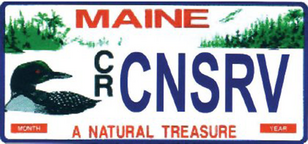
All vehicles with a Maine loon license plate receive free admission to Maine State Parks and Historic Sites* on Sunday, July 12, 2026. This is a thank you to all who purchase this special plate that supports the conservation efforts of both Maine's State Parks and the Department of Inland Fisheries and Wildlife. Purchase a Loon/Conservation license plate online from the Bureau of Motor Vehicles or at your local town office.
*Please Note:
- No rain date available
- 9 AM to closing; day use only
- Open admission does not apply to Acadia National Park, the Allagash Wilderness Waterway, Baxter State Park, Peacock Beach, the ME Wildlife Park, Scarborough Beach State Park, Swan Island, the Penobscot River Corridor, or the Penobscot Narrows Observatory in Prospect, though admission to Fort Knox Historic Site will be free with the Loon Plate.
Top of page
|
Camden Hills State Park - Camden, Maine
Cobscook Bay State Park - Edmunds Township, Maine
Colonial Pemaquid State Historic Site
- July 14, 2026 : NOTE that this program location is at the Pemaquid point Learning Center, not at Colonial Pemaquid State Historic Site. The Historic Site and the Town of Bristol are co-sponsoring the event - Arctic Ghost Ship at Pemaquid Point Learning Center
Damariscotta Lake State Park - Jefferson, Maine
Ferry Beach State Park - Saco, Maine
Holbrook Island Sanctuary State Park - Brooksville, Maine
Quoddy Head State Park - Lubec, Maine
Range Pond State Park - Poland, Maine
Reid State Park - Georgetown, Maine
Wolfe's Neck Woods State Park - Freeport, Maine
Top of page
We're excited to announce that the Maine Trails Program Online Grant Application Portal is now live!
Applicants may now create an account, begin a new application, save their progress, upload required documents, and submit their applications online. The new portal is designed to make the application process more convenient and provide a better overall applicant experience.
To get started:
As a reminder:
- The application deadline is July 17, 2026.
- The application questions, required attachments, and supporting documentation have not changed and remain the same as outlined in the Program Guidance document.
- Paper applications will continue to be accepted on a limited basis.
- Applications submitted by email will not be accepted.
We encourage applicants to begin their applications early. The portal allows you to save your work, return to it at any time before the deadline, and verify that all required materials are included before submitting.
We look forward to receiving your applications and appreciate your continued commitment to expanding and improving trail opportunities across Maine.
Online Portal
~ Adam Fisher, Maine Trails Planner
Top of page
Click on the image or scan the QR Code to learn more.
1. Know Before You Go
- Research local rules, permits, weather and conditions.
- Come prepared with the right gear, supplies and a backup plan. For expert advice, explore with a Registered Maine Guide.
- Respect private land, and recognize working forests and waters.
Top of page
The next phase in the browntail moth lifecycle, where adults emerge from their pupal packets and look for mates, has begun. At night, female browntail moths typically rest on foliage and release a pheromone that attracts male browntail moths.
Although adult browntail moths have hairs on their abdomens, these hairs are not the toxic hairs found in the caterpillar stage. However, it is important to avoid touching the adult moths, as they may pick up residual caterpillar hairs when emerging from their pupal packets, which could cause a rash.
Can you correctly identify an adult browntail moth?
Adult browntail moths have white wings, fuzzy white legs, and a reddish-brown abdomen, or “tail.” Sometimes, adults will have a single black dot on each forewing.
In the northeast, we have a huge diversity of white moths that are active at the same time as browntail moth, which can make identifying browntail moths challenging. Use the moth comparison chart below to help you identify some of the white moths you may see during the browntail moth flight season.
Click on the Moth Comparison Chart to download the online PDF.
How to keep populations low around your house
Outdoor lights are highly attractive to browntail moth adults. It is recommended to turn off outdoor lights at night from now through early August to avoid attracting browntail moths. Making your property less attractive to adult browntail moths may reduce the amount of browntail moths flying and mating in your trees, therefore reducing the amount of browntail moth eggs (and future caterpillars!).
If you can't turn your outdoor lights off at night, consider swapping the outdoor bulb color from white-blue to yellow to attract fewer browntail moth adults according to research from the Mech Lab at UMaine Orono.
This July, remember:
- Turn off non-essential outdoor lights at night.
- Yellow bug lightbulbs are sold at many hardware stores and can be a good option if lights need to stay on outside.
- Avoid using lightbulbs on the UV side (cool white-blue hues), such as mercury vapor, metal halide, and some LED bulbs.
Browntail moth FAQs.
View the Browntail Moth Interactive Map.
~Courtesy posting for the Maine Forest Service.
Top of page
The Maine Department of Agriculture, Conservation and Forestry and Somerset Woods Trustees are hosting a workshop July 29, 9:30-12:00 to update public tree and forest managers and public works staff along with interested community members on the known status of emerald ash borer in Maine, local and state management efforts, municipal support opportunities, and will include plenty of time for Q&A. The program will begin at 9:30 AM on July 29th at the Parkman Hill Farm in Madison and will run roughly 2.5 hours.
REGISTER
~ Courtesy posting for the Maine Forest Service
Top of page
The Invasive Forest Pests Interactive Map & Reporting tool tracks the latest detections of invasive forest pests by town. Each species description includes links to report new findings and to access additional details on biology, management, and regulations.
For more forest health information, visit maine.gov/foresthealth
~ Courtesy posting for the Maine Forest Service
Top of page
Send article suggestions or newsletter comments to Jocelyn Hubbell, Interpretive Specialist, webmaster, and newsletter editor for the Maine Bureau of Parks and Lands.
Read back issues of the newsletter.
|