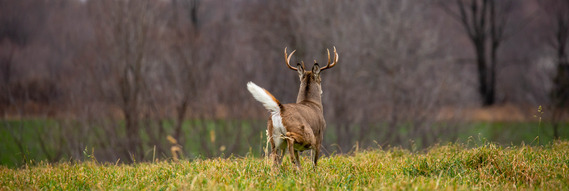
Protect Maine's white-tailed deer
Do your part to keep Chronic Wasting Disease (CWD) out of Maine
Maine is fortunate to remain free of Chronic Wasting Disease (CWD), a fatal disease that affects deer and other members of the deer family. CWD has a 100% mortality rate in infected deer, and once established, it can be extremely difficult to control.
Hunters play an important role in keeping this disease out of Maine. Whether you're hunting here at home or traveling out of state, a few simple precautions can help protect Maine's deer population and hunting tradition.
3 Ways Hunters Can Help Prevent CWD

1. Follow Maine's import laws
It is illegal to bring wild deer, moose, caribou, or elk carcasses or parts into Maine from any state or province except New Hampshire, with limited exceptions. Hunters may bring back:
- Boned-out meat
- Hardened antlers, with or without skull caps
- Skull caps cleaned free of brain and other tissue
- Hides without the head portion
- Finished taxidermy mounts
When in doubt, leave the carcass behind and review Maine's importation requirements before traveling home.
|

2. Take precautions when hunting out of state
If you're hunting deer, moose, caribou, or elk outside Maine, take steps to minimize the risk of bringing CWD back with you. Wear gloves when field dressing, avoid contact with the brain, spinal cord, spleen, and lymph nodes, and thoroughly clean your hunting equipment before returning to Maine and heading back into the woods.
|

3. Avoid urine-based lures
Choose synthetic, non-urine-based lures instead of products made with real deer or elk urine. Most commercial urine-based lures use urine collected from captive deer or elk farms. Because there are no standardized methods for testing these products for infectious CWD prions, we cannot be sure they are free of contamination.
If an infected animal's urine is used, CWD prions could be introduced into the environment, where they can persist in soil for years and potentially expose Maine's deer to the disease.
If you use urine-based lures, avoid applying them to your clothing or skin or placing them where deer can come into contact with them. Choosing synthetic alternatives is a simple way to help protect Maine's deer.
|
CWD has never been detected in Maine, thanks in part to ongoing monitoring and prevention efforts. MDIFW continues to monitor Maine's deer and other cervid populations, but preventing the disease from entering the state takes everyone's help.
Together, we can help keep Maine's deer healthy and protect the hunting opportunities we enjoy for generations to come.
|